Is an implant right for you?
- You have one or more missing teeth and want a fixed replacement.
- You'd rather not have a bridge that involves the neighbouring teeth.
- Your denture is loose and you'd like it held more securely.
- Your gums are healthy and you have enough bone in the area.
Implants aren't suitable for everyone. Smoking, uncontrolled diabetes, some medicines and untreated gum disease all raise the chance of an implant failing. We check this with you at the consultation.
What happens, step by step
- Consultation and planning. We examine your mouth, take X-rays or scans and explain whether an implant is a good option for you.
- Placing the implant. Under local anaesthetic, with sedation if you'd like it, the implant is placed in the jawbone.
- Healing. Over the next few months the bone grows around the implant and holds it firmly.
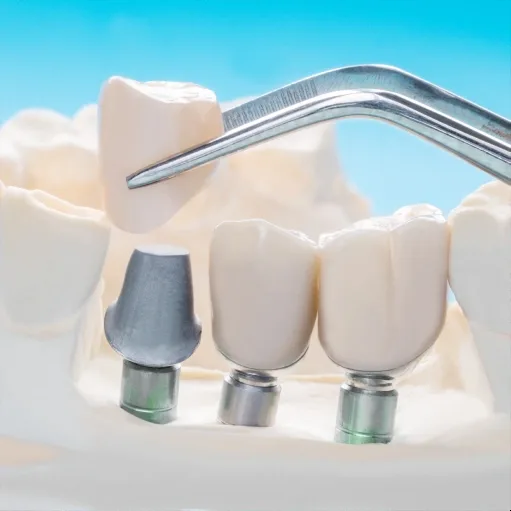
- The new tooth. Once it has healed, a custom-made crown is attached to the implant.
- Review. We check the implant at your regular visits.
Cost and payment
Implants cost more than other ways of replacing a tooth because of the materials, planning and number of visits involved. After your consultation, we'll give you a treatment plan and quote. See fees and payment options.
Risks, benefits and alternatives
An implant is fixed, helps preserve the bone where the tooth was lost and leaves neighbouring teeth untouched. It does involve minor surgery, with risks such as infection, bleeding, damage to nearby structures and, in a small number of cases, the implant not bonding with the bone. Implants need the same daily cleaning and check-ups as natural teeth. Alternatives are a bridge, a partial denture or leaving the gap.
Aftercare
- Expect some swelling and tenderness for a few days after the implant is placed.
- Eat soft food and keep the area clean as we show you.
- Don't smoke while it heals. Smoking increases the risk of implant failure.
- Brush and clean between your teeth daily, and keep up your check-ups.
Common questions
Does getting an implant hurt?
The area is numbed, so the procedure itself shouldn't be painful.
How long does implant treatment take?
Usually a few months in total, because the bone needs time to heal around the implant before the crown is fitted.
How long do implants last?
With healthy gums, good cleaning and regular check-ups, implants can last many years. The crown on top may need replacing sooner because of normal wear.
Am I too old for an implant?
Age alone isn't a barrier. General health, gum health and bone matter more.
Can implants hold a denture in place?
Yes. Two or more implants can be used to clip a denture in securely. Ask us at your denture consultation.